
From the forest, with care
What the Trincheira Bacajá Indigenous Territory produces, gathered and made by the communities themselves.
What the forest offers
Xikrin artisans and knowledge holders gather forest resources for food, traditional medicine, music, body painting and the making of artifacts. The Association coordinates the collective sale of Brazil nuts, with the storehouse in Krãnh village, and strengthens the cacao and babassu value chains, so that income reaches the families without middlemen.
- Timbó vine
- Inajá palm
- Copaíba
- Genipap (jenipapo)
- Tuturubá
- Pau-preto
- Annatto (urucum)
- Marfim
- Bamboo
- Brazil nuts
- Açaí
- Wild cacao
- Ingá
- Banana
- Palm heart
- Titica vine
- Babassu
- Jatobá
- Cajá
- Honey
- Kupá vine
- Pequi
- Cumaru
- Sapucaia
- Embaúba
- Tatajuba
- Frutão
- Bacaba
- Andiroba
Made by Xikrin women
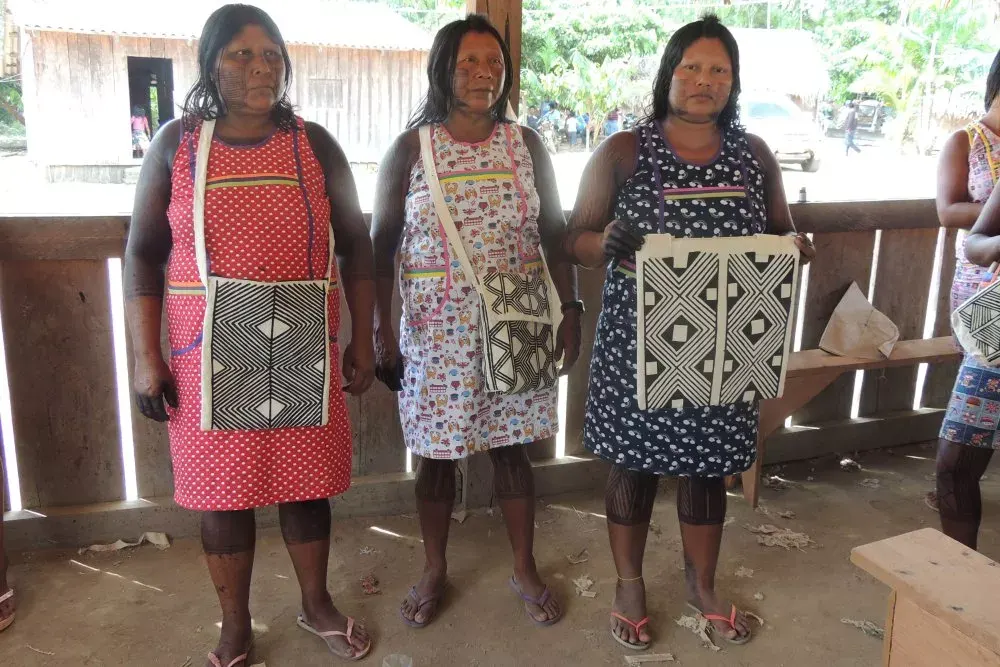
The menire, Xikrin women, learn graphic patterns from meprire, early childhood: they practice on clay dolls and, as teenagers, paint one another. The patterns are ancient; painting on fabric is more recent.
Around 69 artisans make bio-jewelry, painted canvases and everyday pieces with seeds and fibers from the territory, such as tento, jarina, tucumã and paxiúba, as well as glass beads. The Menire Xikrin Free School is certified by Brazil’s Ministry of Culture, and the Association has a Menire Coordination, chaired by Irei Xikrin.
Coming soon
Brazil nuts, babassu, cacao and menire handicrafts will be available here, with the income going directly to the villages. Buyers interested in wholesale can already write to the Association.